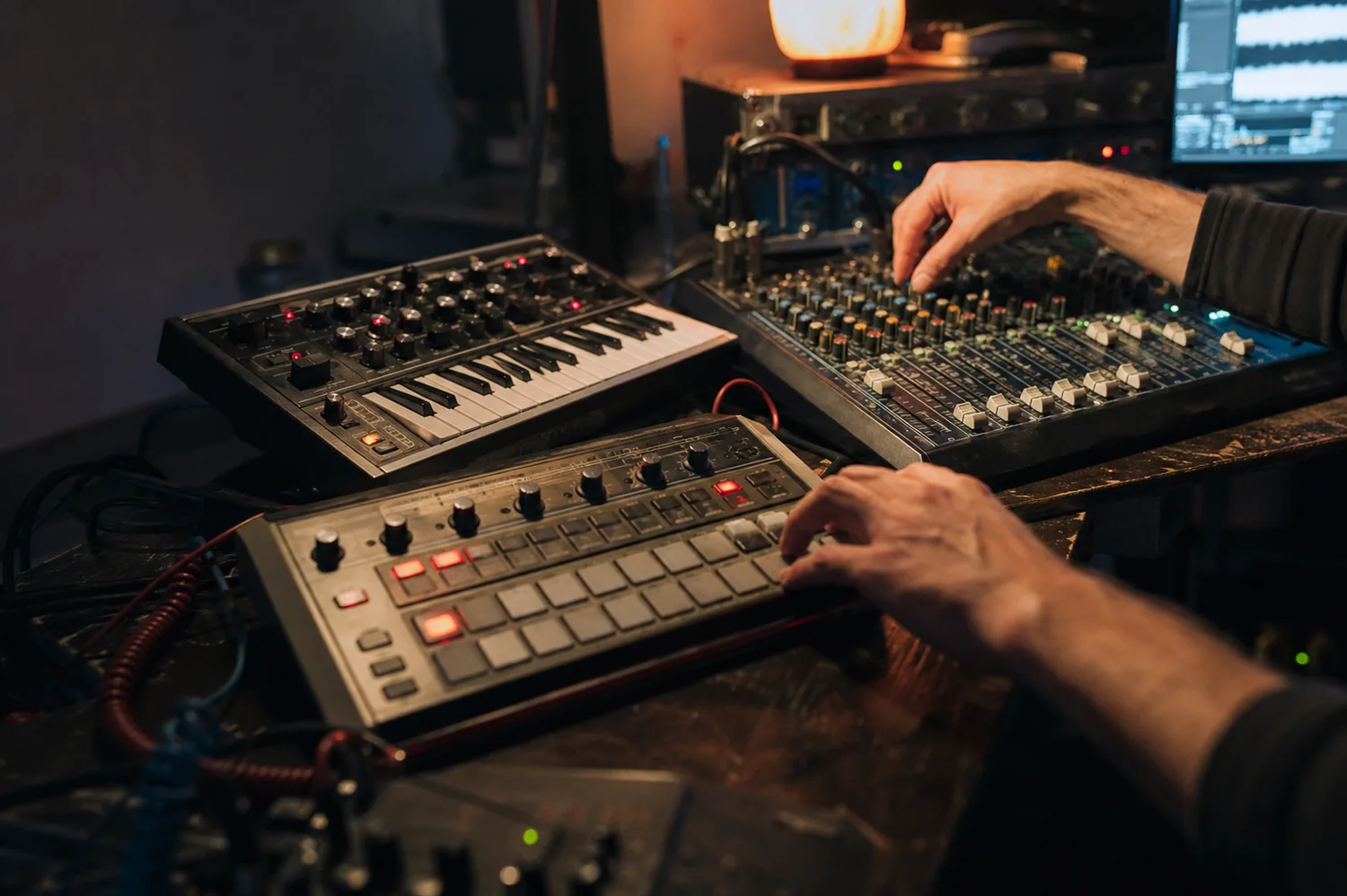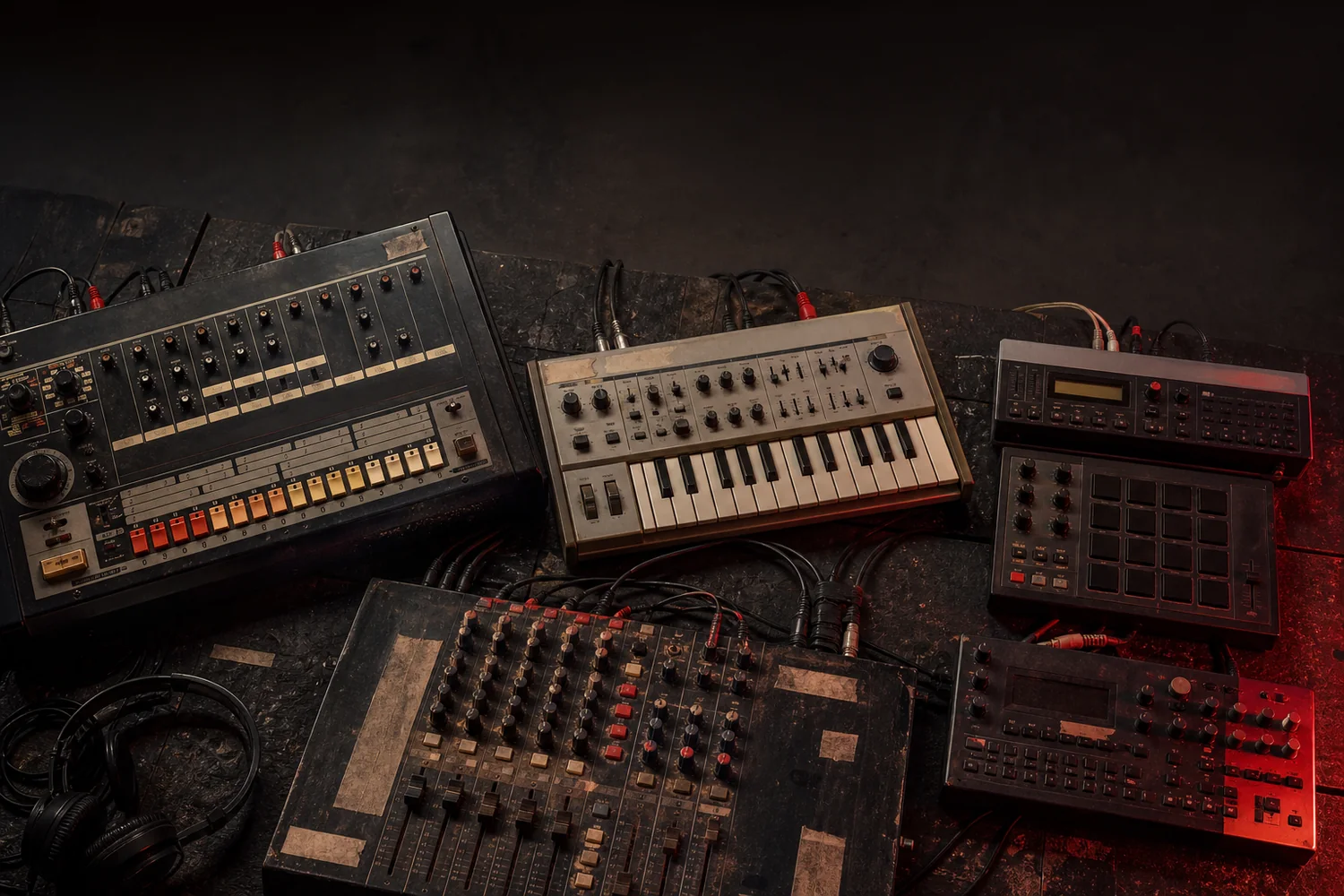
Released in 1988, the Korg M1 brought a powerful combination of sampled sounds, synthesis, effects, sequencing and drum programming into a single workstation. That integration mattered. Producers could move from an idea towards an arrangement without rebuilding the entire studio around every decision.
Its piano became especially important to house music. Bright, percussive and able to cut through a busy mix, the sound carried chords with an unmistakable attack. It was not a perfect recreation of an acoustic instrument—and that was precisely why it worked. It behaved like a record-making tool.
Across piano house and related dance styles, that character became part of a collective vocabulary. The M1 could make a progression feel immediate, uplifting and physical. Its recognisability did not prevent creativity; it gave producers a common starting point that could be reshaped through rhythm, voicing, sampling and arrangement.
The workstation also changed expectations about speed. Composition, sound selection and sequencing could happen within one connected environment. For independent musicians, fewer barriers between inspiration and arrangement meant more ideas could survive the journey into finished tracks.
The M1 remains significant because it joined workflow and identity. It did not merely offer more sounds. It helped define how a generation organised musical ideas—and gave piano house one of the clearest voices in its history.