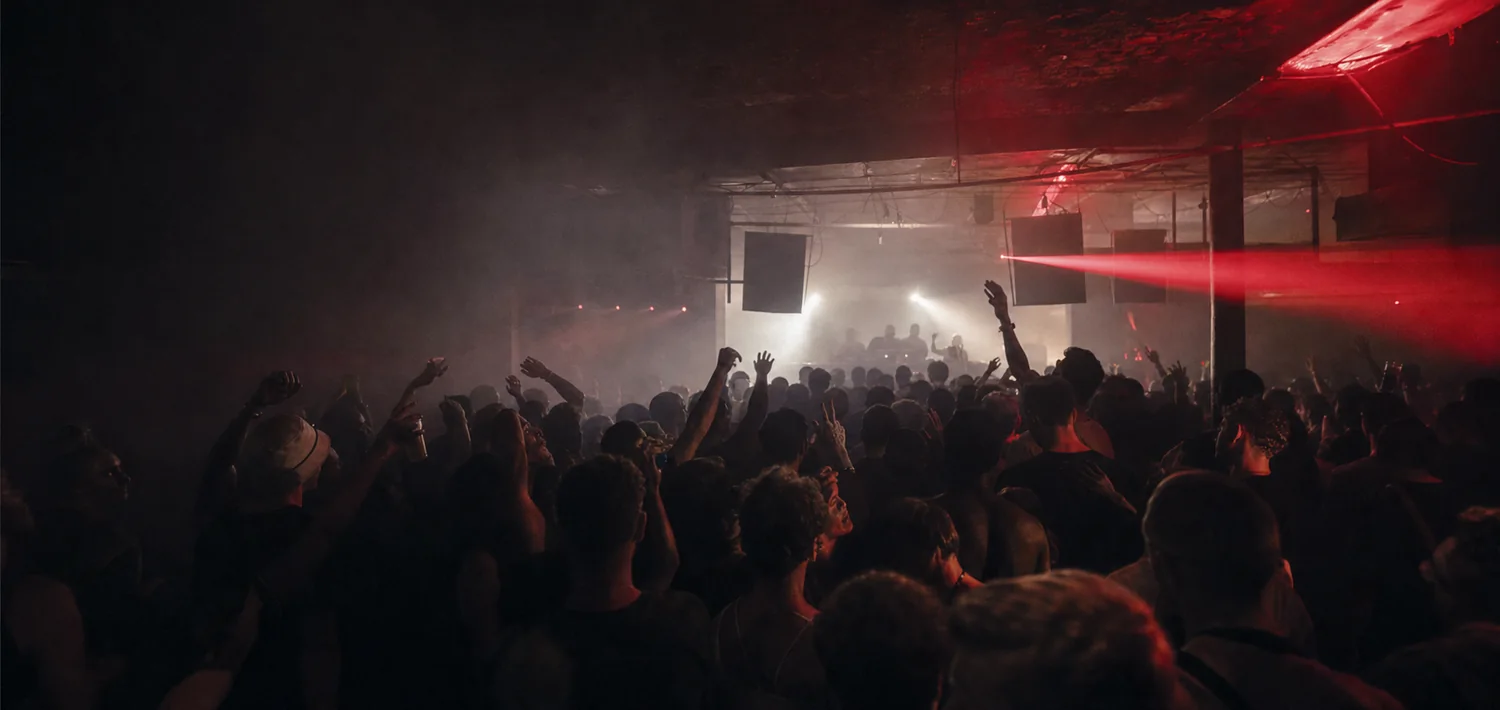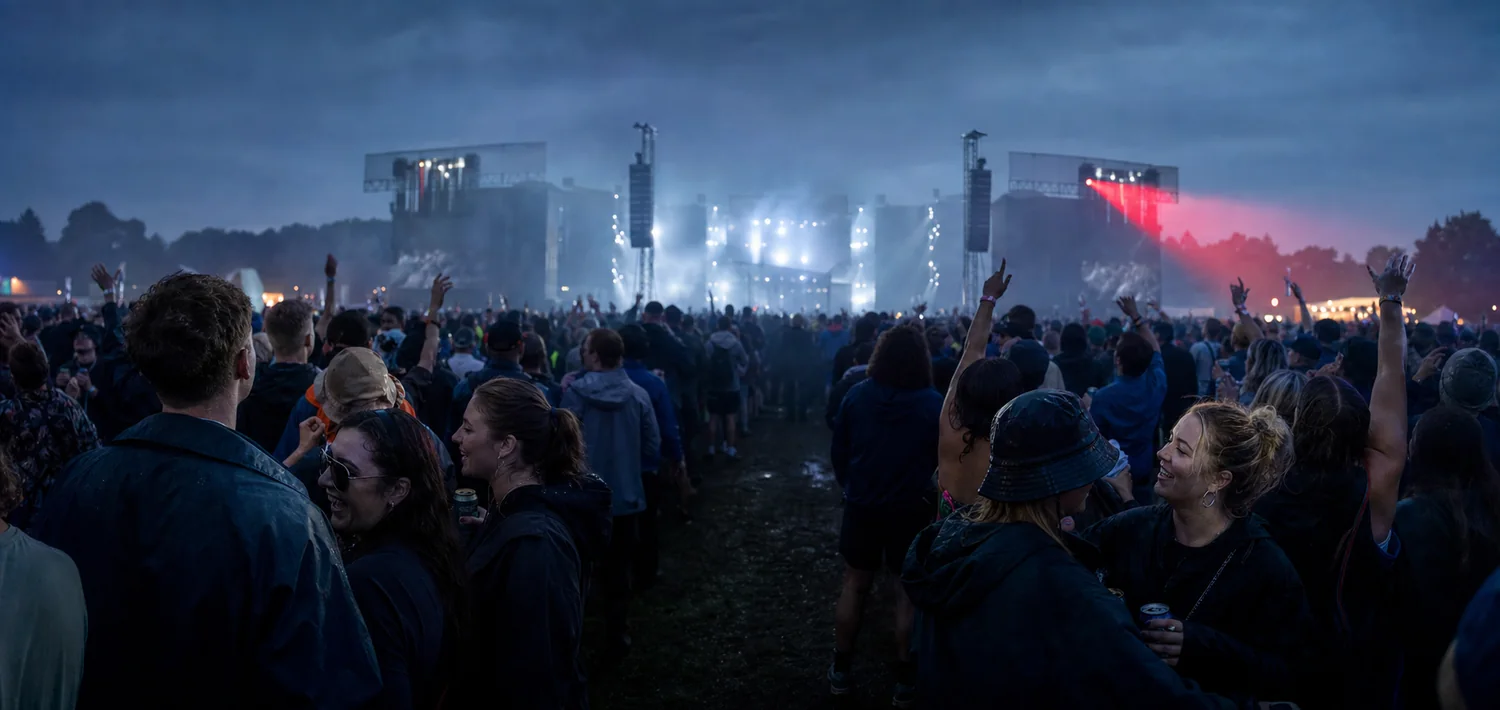
The early festival field could feel provisional: canvas, open paths, temporary sound and a crowd learning the shape of the site together. Modern festivals increasingly resemble short-lived cities, with specialised stages, transport systems, security, digital payment, hospitality and carefully engineered flows of people.
That transformation created extraordinary possibilities. Production can now build environments that would have been unimaginable at the beginning of dance-music festival culture. Sound, light and architecture work together across a scale capable of turning a field into a complete visual world.
Growth also changes the relationship between audience and place. Distance becomes part of the programme. Queues, routes, weather, phone signal, shelter and access can shape a person's memory as strongly as the headline performance. Infrastructure is not separate from the creative experience; it determines whether people can remain open to it.
The best large festivals retain human-scale intelligence. Clear information, thoughtful stewarding, places to recover and a crowd willing to make room for one another protect the feeling that scale can otherwise overwhelm.
The festival field is therefore a study in balance: spectacle and care, efficiency and surprise, temporary architecture and private memory. The city disappears after the final night. What remains is often a very small moment shared inside it.